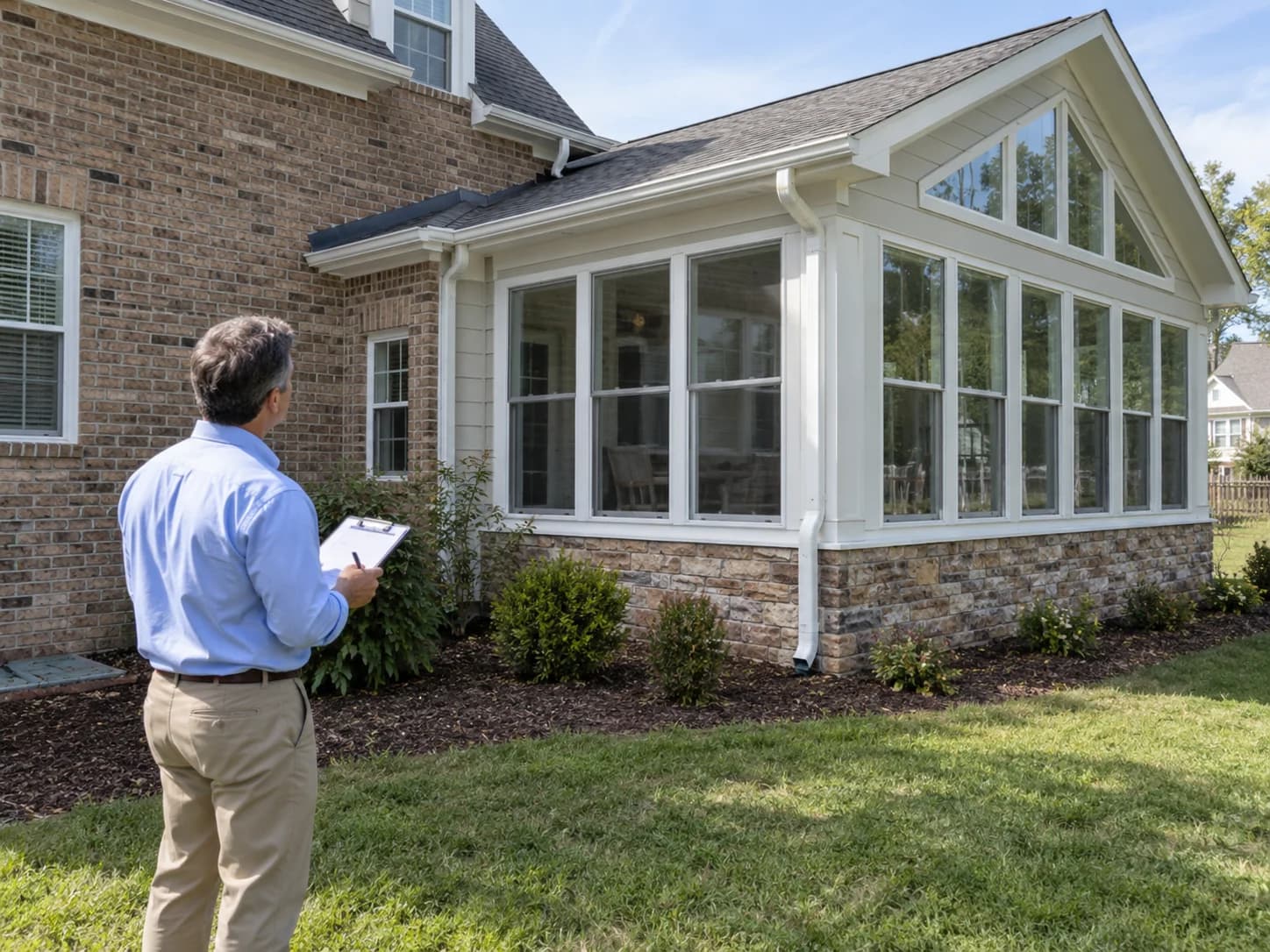
An unpermitted addition appraisal in North Carolina does not automatically mean the added space has no value. An appraiser looks at what was built, the quality and condition of the work, how the space functions with the rest of the home, how buyers respond to similar properties, and whether the missing permit affects marketability. There is no blanket rule that every unpermitted room gets ignored.
At NC Real Estate Appraisals, we see this question come up with finished additions, enclosed porches, garage conversions, expanded bedrooms, and homes where the physical layout does not match county records. The permit issue matters, but it is only one part of determining what the property is worth.
What Counts as an Unpermitted Addition?
An unpermitted addition is generally an improvement that required a local building or trade permit but was completed without one or without the required approvals. That might involve a true addition to the home’s footprint, a new story, an enclosed porch, a structural conversion, or work involving electrical, plumbing, or HVAC systems.
Requirements vary depending on the work and jurisdiction. In Mecklenburg County, residential plan review covers additions and several projects that increase or change finished residential space, including additional stories, enclosed porch conversions, and accessory dwelling units. Homeowners can review the county’s residential plan review guidance when researching a Charlotte-area property.
A homeowner should not assume older work was automatically exempt simply because it has existed for years. Permit records, plans, previous listings, contractor documentation, and information from the local code office may all provide useful context.
How an Unpermitted Addition Appraisal Works
The appraiser values the property as it exists on the effective date of the appraisal while identifying characteristics that affect value and marketability.
If an addition lacks a required permit, the appraiser does not automatically assign it the same value as fully documented living area. The space also does not automatically receive zero value.
Fannie Mae’s current appraisal guidance specifically addresses additions without permits. When an appraiser identifies an addition that does not have a required permit, the appraiser must discuss the quality and appearance of the work and its effect, if any, on the property’s market value. The Fannie Mae appraisal guidance for property improvements explains this requirement.
That means the physical property still matters. The appraiser may consider workmanship, materials, heating and cooling, access, layout, electrical and plumbing features, condition, and how naturally the addition functions with the original house.
A professionally finished family-room addition presents a very different valuation question from an enclosed porch with moisture problems, improvised electrical work, or an awkward connection to the main living area.

Does Unpermitted Square Footage Count in the Appraisal?
This is where homeowners often expect a simple yes or no answer.
Square footage reporting and permit status are related, but they are not the same issue. Appraisal measurement standards determine how different areas of a home get measured and reported. Permit records address whether the work received required local approvals.
For many one-unit properties, Fannie Mae requires appraisers to follow the ANSI Z765-2021 standard for reporting above-grade, below-grade, and other finished areas. Some areas that do not meet the standard for typical above-grade finished space must be reported separately even if they are finished and useful.
An addition could physically satisfy measurement requirements while still having an unresolved permit issue. The appraiser would then need to address the lack of a permit and analyze how buyers in that market react to the space.
This is also why homeowners should avoid calculating potential appraisal value by multiplying the addition’s square footage by an average price per square foot. Residential appraisal adjustments should reflect market evidence, not a flat mathematical formula.
An Unpermitted Addition Can Still Contribute Value
Buyers often recognize the practical utility of additional space. A finished room that creates a useful office, bedroom, family room, or larger living area may influence what buyers will pay for the property.
Comparable sales provide much of the evidence. If similar nearby homes have additions or comparable finished areas, their sale prices may show how the local market values that feature.
The amount of contributory value does not necessarily equal the amount the homeowner spent on construction. A $60,000 addition does not automatically increase the home’s appraised value by $60,000.
Permit uncertainty can also affect buyer behavior. Someone considering the property may worry about future repairs, inspections, insurance questions, financing, or resale. If those concerns create measurable market resistance, they become relevant to the appraisal.
When an Unpermitted Addition May Hurt the Appraisal
The missing permit becomes more significant when another problem accompanies it.
Poor workmanship is one example. Structural concerns, unfinished electrical work, inadequate heating, water intrusion, or visibly low-quality construction can affect the condition and appeal of the property regardless of permit history.
An unusual conversion can also create complications. A garage converted into living space might add interior utility while removing parking that buyers expect in that neighborhood. A second living unit could raise zoning or property-type questions that would not apply to a simple bedroom addition.
Size matters in context as well. Fannie Mae notes that large additions or other improvements can become over-improvements if they go beyond what buyers typically demand in that neighborhood. They may still add value, but the market may not support their full construction cost.
The appraiser’s job is to determine what the market supports rather than reward or penalize a property simply because construction occurred.
What Homeowners Should Gather Before the Appraisal
If you already know an addition may have a permit issue, give the appraiser accurate information rather than trying to minimize the improvement or guess about its history.
Useful records include:
- Available building permits or inspection records
- Contractor invoices, plans, drawings, and receipts
- The approximate year the addition was completed
- Documentation for major electrical, plumbing, HVAC, or structural work
- Prior listings or appraisal reports that describe the space
For properties in Charlotte and the surrounding area, our Mecklenburg County appraisal service area includes information about the local markets we regularly cover.
If the permitting history remains unclear, contact the appropriate local permitting office. Avoid telling an appraiser that work was permitted unless you have documentation or public records supporting that statement.
Should You Resolve the Permit Issue Before Selling or Refinancing?
It depends on the property and what the local jurisdiction finds.
Do not assume that getting a permit after construction is complete will involve only filing paperwork. The permitting authority may need more information about the project or may have requirements that depend on the type of work completed.
Start by checking what records already exist. Some homeowners discover that permits were issued under a previous owner or contractor even though the paperwork never made its way into their files.
If nothing appears in the records, the local building department is the appropriate source for questions about what the work required and what options are available now.
The appraisal process and permitting process serve different purposes. Resolving one does not automatically resolve the other.
What If You’re Buying a Home With an Unpermitted Addition?
Buyers should look beyond the advertised bedroom count or total square footage.
Ask the seller for permit documentation and compare the existing house with available property records. A home inspection may identify construction concerns, while an appraisal addresses market value. Those are separate questions.
Your lender may also have its own requirements after reviewing the property and appraisal. A privately ordered appraisal does not control a lender’s underwriting decision.
For purchases, refinances, estates, PMI matters, and other residential valuation needs, our standard residential appraisal service examines the property alongside comparable sales and current local market conditions.
Get the Addition Evaluated in the Context of the Market
An unpermitted addition does not produce one automatic appraisal result. A well-integrated room may contribute meaningful value. A poorly executed conversion could contribute less or create marketability concerns that affect the final analysis.
The appraiser has to consider the physical utility of the space, its condition, permit status, relevant measurement standards, and how comparable properties compete in the local market.
That analysis becomes particularly useful when county records and the home’s actual layout do not agree.
NC Real Estate Appraisals works with homeowners, buyers, attorneys, investors, and property owners throughout Charlotte and the surrounding market. If you need an appraisal for a home with an addition, conversion, or square-footage discrepancy, contact us about the property and intended use of the appraisal before scheduling.